
Our research team conducted an extensive analysis on residential roof replacement cost data from three sources: licensed contractor proposals, Florida Building Code permit records, and regional pricing surveys across Collis Roofing's service markets. The data covers January through November 2026. Collis Roofing is Florida's largest residential roofing contractor. The company is family owned and operated and has completed 6,856 permitted roof replacements in three years. That gives it a firsthand view of how material costs, code requirements, and storm-driven demand shape budgets across the state. The tables below present the most current available pricing for each major roofing material and market area, beginning with a statewide material-by-material breakdown.
Florida Residential Roof Replacement Cost by Material — 2026
Florida homeowners face residential roof replacement costs that run approximately 15–28% above the national average, driven primarily by the Florida Building Code's strict hurricane-resistance requirements and the state's high-risk insurance environment.
The table below shows installed costs for the materials most commonly used in Florida residential roofing, from budget-tier asphalt shingles to premium clay tile. It also gives each material's expected lifespan in Florida's climate.
Scroll sideways to view the full table.
| Material | Cost per Sq Ft (FL) | Avg Project Cost (FL, ~2,100 Sq Ft Home) | Lifespan in FL Climate | FL Premium vs. National Avg |
|---|---|---|---|---|
| 3-Tab Asphalt Shingles | $3.75–$5.30 | $8,800–$12,400 | 12–17 years | +15–20% |
| Architectural Shingles | $4.80–$7.45 | $11,300–$17,500 | 20–25 years | +15–20% |
| Impact-Resistant Shingles | $5.95–$9.20 | $14,000–$21,600 | 25–35 years | +15–22% |
| Metal (Exposed Fastener) | $7.00–$15.00 | $16,400–$35,200 | 40–55 years | +18–25% |
| Standing Seam Metal | $12.00–$22.00 | $28,200–$51,600 | 50–70 years | +18–25% |
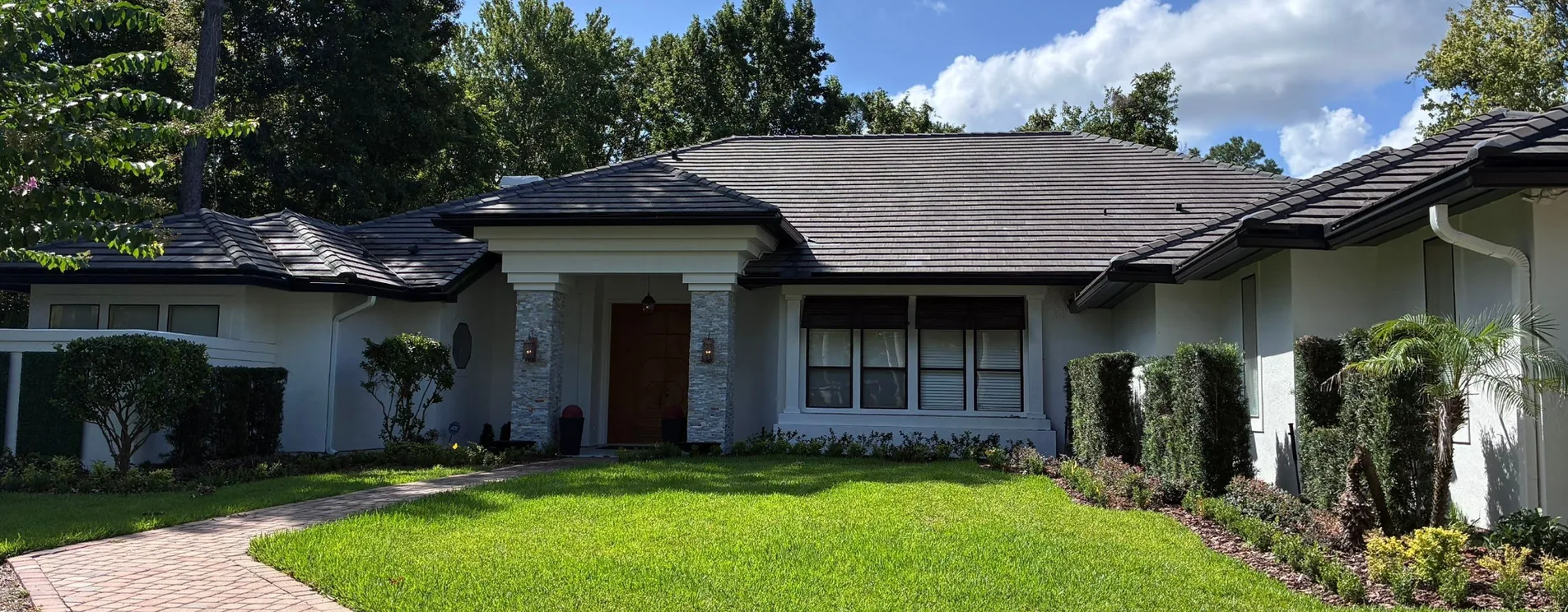
| Concrete Tile | $10.50–$16.00 | $24,600–$37,500 | 40–50 years | +20–28% |
| Clay Tile | $14.00–$21.00 | $32,900–$49,300 | 50+ years | +20–28% |
Source: Collis Roofing Research Team, "Residential Roof Replacement Cost in Florida: 2026" (compiled January–October 2026). Project totals apply each material's installed cost per square foot to roughly 2,347 sq ft of roof surface, the area of a 2,100 sq ft single-story home at a 6:12 pitch.
Key Research Findings:
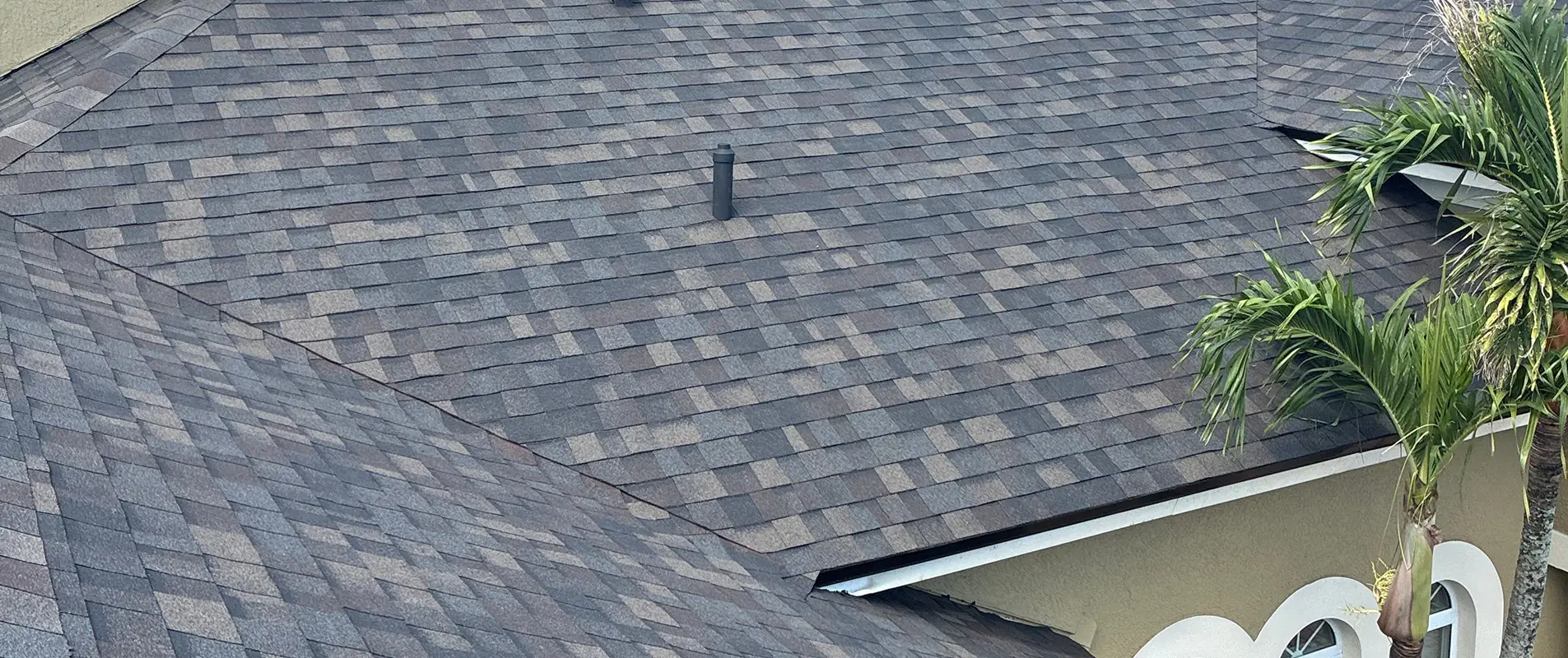
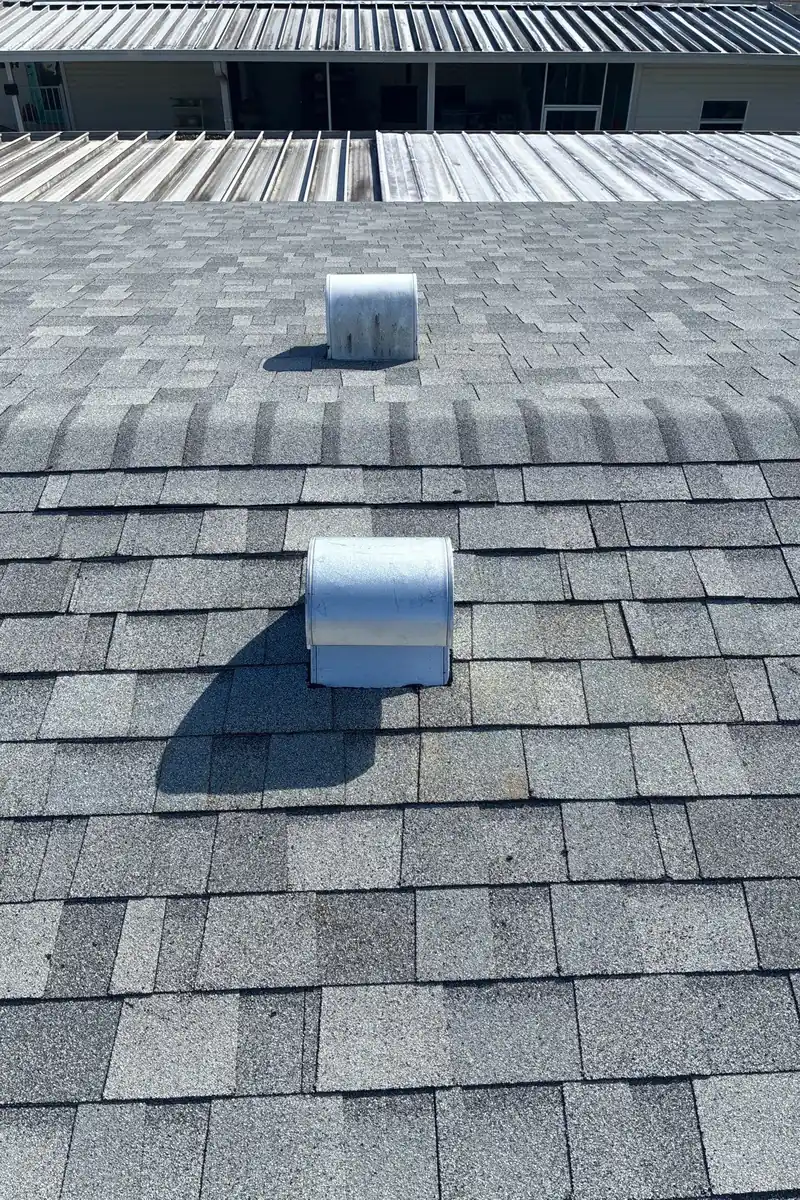
Architectural shingles remain Florida's most common material choice, priced in the $11,300–$17,500 range for a typical 2,100 sq ft home. Their wind ratings of 110–130 mph meet standard Florida Building Code requirements. But their 20–25 year lifespan in Florida's heat and humidity means many homeowners will face a second replacement within their ownership tenure. That is worth weighing in the initial material decision.
Florida's residential roof replacement cost premium over the national average is code-driven, not arbitrary. The Florida Building Code mandates enhanced nail patterns, secondary water barriers over the full roof deck, and Miami-Dade approved materials in High-Velocity Hurricane Zone counties. Those requirements add an estimated $2,000–$5,000 to any compliant installation, and no licensed Florida contractor can skip them.
Standing seam metal is the fastest-growing residential roofing category in Florida, carrying a wind rating of 140–180 mph and a lifespan of 50–70 years. It costs roughly 2.5–3× what architectural shingles do. In return it delivers among the strongest long-term insurance savings and one of the longest service lives in this report. That makes it the preferred choice for Florida homeowners planning to stay in their property long term. For a detailed breakdown of metal roofing costs, see Collis Roofing's Average Metal Roof Replacement Cost: 2026 Report.
Residential Roof Replacement Cost by Florida Market — 2026
Residential roof replacement costs vary by up to 18% across the four primary markets that Collis Roofing serves, with coastal proximity, local labor supply, and post-storm demand all contributing to city-level pricing differences.
The table below presents current 2026 cost ranges for the three most commonly installed material categories in Tampa Bay, Orlando, Melbourne/Space Coast, and Jacksonville.
Scroll sideways to view the full table.
| City / Market | Architectural Shingles | Standing Seam Metal | Concrete & Clay Tile | vs. FL State Avg |
|---|---|---|---|---|
| Tampa Bay | $11,700–$19,200 | $29,300–$56,800 | $25,600–$54,200 | +4–10% |
| Orlando Metro | $11,300–$17,500 | $28,200–$51,600 | $24,600–$49,300 | State Average |
| Melbourne / Space Coast | $11,400–$18,500 | $28,400–$54,700 | $24,900–$52,200 | +1–6% |
| Jacksonville Metro | $10,500–$16,100 | $26,200–$47,500 | $22,900–$45,300 | −7–8% |
Source: Collis Roofing Research Team, "Residential Roof Replacement Cost in Florida: 2026" (compiled January–October 2026), based on contractor proposals and permit records in each market. Percentages compare each market with the Orlando baseline, which equals the statewide average.
Key Research Findings:
Orlando serves as the statewide pricing baseline for residential roof replacement. Tampa Bay runs roughly 4–10% above that average, a premium attributable to tighter contractor capacity in a dense coastal metro and consistently elevated post-storm demand along the Gulf Coast. Jacksonville, by contrast, comes in about 7–8% below the state average, reflecting lower prevailing labor rates in Northeast Florida.
Melbourne and the Space Coast occupy a near-average pricing tier, sitting roughly 1–6% above the Orlando baseline. That modest coastal premium reflects a smaller licensed contractor pool than the Tampa and Orlando metros. The supply-and-demand gap can extend scheduling timelines, particularly in the weeks immediately following a named storm event.
Post-hurricane demand spikes consistently compress both timelines and pricing flexibility across all four markets. Homeowners who schedule residential roof replacements during the November–March dry season historically secure better contractor availability and more competitive bids. They also get faster permit-to-installation timelines than those who enter the market during or immediately after peak storm season.
Florida Residential Roof Replacement Cost by Home Size — 2026
One of the most practical questions Florida homeowners ask when budgeting a residential roof replacement is: what will this cost for my specific home? The table below scales current 2026 Florida pricing across four common home sizes, from 1,500 to 3,000 square feet of living area, for the three most widely installed material categories.
Scroll sideways to view the full table.
| Home Size (Sq Ft) | Architectural Shingles | Standing Seam Metal | Clay & Concrete Tile |
|---|---|---|---|
| 1,500 | $8,000–$12,500 | $20,100–$36,900 | $17,600–$35,200 |
| 2,000 | $10,700–$16,700 | $26,800–$49,200 | $23,500–$46,900 |
| 2,500 | $13,400–$20,800 | $33,500–$61,500 | $29,300–$58,700 |
| 3,000 | $16,100–$25,000 | $40,200–$73,800 | $35,200–$70,400 |
Source: Collis Roofing Research Team, "Residential Roof Replacement Cost in Florida: 2026" (compiled January–October 2026). Totals apply the statewide per-square-foot ranges to roof surface area.
Note: Roof surface area runs about 11.75% larger than a home's living square footage on a standard single-story home with a 6:12 pitch. Every project total in this report applies that factor, so the 2,100 sq ft home in the material table reflects roughly 2,347 sq ft of roof surface. Estimates are planning benchmarks. A written, inspection-based quote is the only way to confirm exact pricing for a given property.
Key Research Findings:
The wide cost range within each material category reflects the significant role that roof complexity, teardown scope, and existing structural condition play in final project cost. Tile shows this most clearly, spanning roughly $17,600 to $35,200 on a 1,500 sq ft home. Homeowners should budget toward the upper end of the range for homes with steep pitch, multiple valleys, or decking that has not been inspected since the last replacement.
Tile on homes larger than 2,500 sq ft may require a structural engineering review, particularly for older properties converting from asphalt shingles to tile for the first time. Tile weighs 9–12 lbs per square foot versus approximately 2–4 lbs for asphalt. Florida homes built before 2002, when the statewide Florida Building Code took effect, are not always engineered for tile loads. A structural assessment typically adds $3,000–$6,000 to the project budget and should be treated as a required line item.
Hidden costs absent from base per-square-foot estimates, including decking repair ($1,500–$10,000), flashing replacement, ventilation upgrades ($1,200–$2,500), and Florida Building Code-mandated inspection fees, should be itemized in any written quote. Any estimate that does not separately disclose these line items warrants a follow-up before signing.
Florida Homeowner Insurance Savings: New Residential Roof Wind Mitigation Credits — 2026
For Florida homeowners, the total financial impact of a residential roof replacement doesn't end with the installation invoice. A new roof meeting current Florida Building Code standards can qualify for wind mitigation credits that may reduce annual homeowners' insurance premiums.
The table below outlines the primary credit categories, their typical premium impact, and how a qualifying new roof installation establishes eligibility for each. Estimated savings are modeled on a $4,000 annual windstorm premium.
Scroll sideways to view the full table.
| Wind Mitigation Feature | Typical Windstorm Premium Discount | Est. Annual Savings* | How a New FBC-Compliant Roof Qualifies |
|---|---|---|---|
| Secondary Water Barrier (Sealed Roof Deck) | 25–35% | $1,000–$1,400 | Standard on all new FBC-compliant roofs |
| FBC-Rated Roof Covering | 15–45% | $600–$1,800 | Established by code-compliant installation; confirmed on the inspection form |
| Enhanced Fastener Schedule (6-nail pattern) | Included in wind mitigation score | Part of combined discount | Required by FBC; documented at inspection |
| Hip Roof Geometry (if applicable) | 25–35% (where applicable) | $1,000–$1,400 | Structural feature; combined with other credits |
| Combined Wind Mitigation Credits (Full FBC Roof) | 25–45% overall | $1,000–$1,800 | Documented via OIR-B1-1802 inspection form |
Sources: Florida Office of Insurance Regulation, "Premium Discounts for Hurricane Loss Mitigation" and "Windstorm Loss Reduction Credits" (OIR-B1-1699), for the discount ranges. Annual savings are modeled by Collis Roofing on a $4,000 windstorm premium and are not insurer quotes.
Estimated savings are based on a Florida average annual windstorm premium of approximately $4,000. Actual savings vary by carrier, location, home features, and policy terms. Collis Roofing does not guarantee specific insurance outcomes; homeowners should contact their insurer or licensed agent for policy-specific credit confirmation.
Key Research Findings:
The sealed secondary water barrier is the single highest-value wind mitigation feature for insurance purposes, generating a 25–35% discount on the windstorm portion of a homeowner's annual premium. On a $4,000 annual windstorm premium, that translates to $1,000–$1,400 in documented savings every year.
A wind mitigation inspection costs $75–$150 and is valid for five years. The completed OIR-B1-1802 form goes directly to the homeowner's insurer to trigger a premium adjustment. Homeowners who skip this inspection after a qualifying new roof replacement leave documented savings unrealized, and those savings compound with each renewal cycle.
Over the lifespan of a new code-compliant architectural shingle roof (20–25 years), cumulative wind mitigation savings can range from $20,000 to $45,000. The comparison point is the elevated premium assessed on an aging, non-compliant roof older than 15 years. For many Florida homeowners, the insurance savings alone cover a significant share of the original residential roof replacement cost. That figure belongs in any honest material-and-budget comparison. For more on warranty coverage and long-term protection, Collis Roofing backs all installations with Owens Corning Platinum warranty coverage, one of the strongest warranties available in the Florida residential roofing market.
Requesting a Copy of This Report
Get an instant, property-specific estimate with our Quick Quote, no in-person visit required.
Sources
- Collis Roofing Research Team. "Residential Roof Replacement Cost in Florida: 2026." Compiled January–October 2026. Collis Roofing, Longwood, FL.
- Florida Office of Insurance Regulation. "Premium Discounts for Hurricane Loss Mitigation," and "Windstorm Loss Reduction Credits" (OIR-B1-1699). floir.gov/property-casualty/premium-discounts-for-hurricane-loss-mitigation
- Roofing Contractor. "Roof Replacement Costs Jump as Claims Decline." Published June 1, 2026. roofingcontractor.com/articles/102271-roof-replacement-costs-jump-as-claims-decline
- RubyHome. "Roofing Statistics (2026)." Published November 26, 2025. rubyhome.com/blog/roofing-stats